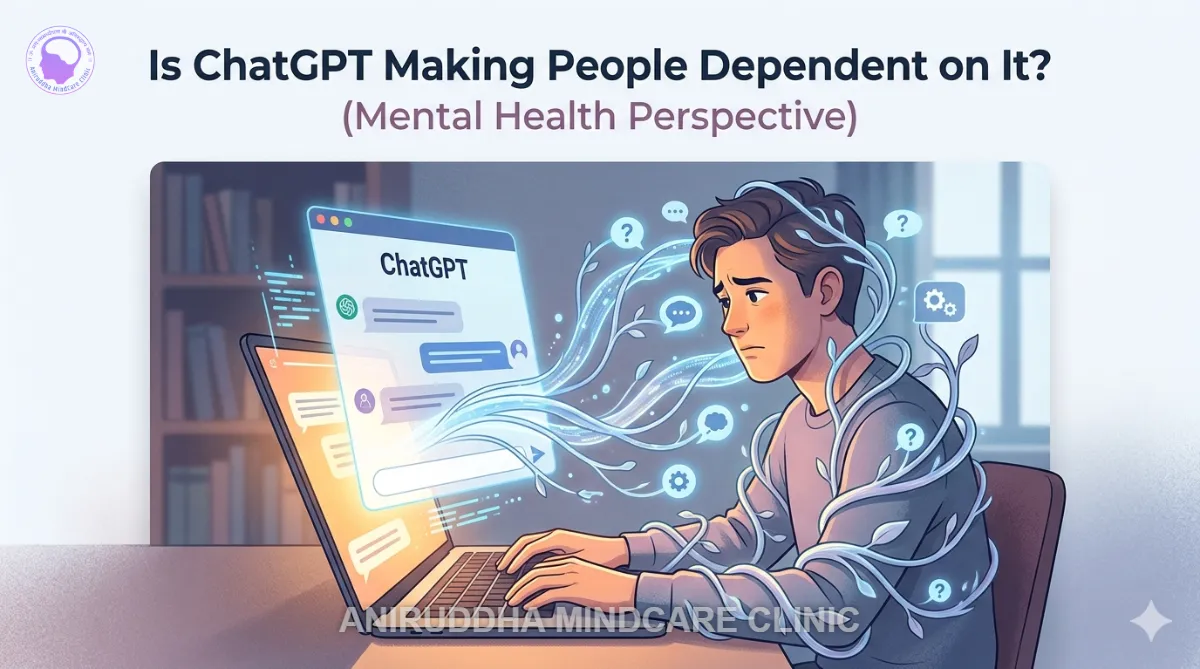
Being Consultant Psychiatrist , at Aniruddha MindCare Clinic, use of ChatGpt , gemini or any other type is very common practice as per my (Dr. Nishikant Vibhute) personal observation. I am seeing increased number of clients, patients getting dependent on ChatGPT. They are asking very simple things also, which they otherwise used to think and plan themselves. Thinking that AI gives best possible solutions they stopped brain-storming totally. This is what we can call over ChatGPT dependence .
Earlier everyone was worried that AI will takeover the human race. But now the scenario is different many are surrendering themselves to AI.
Artificial intelligence tools like ChatGPT have rapidly become part of daily life. From answering questions and writing content to offering emotional reassurance, AI is now easily accessible at any moment. While these tools can be extremely helpful, a growing concern among mental health professionals is psychological dependence on AI. There cases of self harm after discussing some emotional topics with AI. You may read the news of a college graduate who got excessively influenced by ChatGPT.
Lets explore whether ChatGPT can create mental dependence, how it may affect mental health, who is most vulnerable, and how to use AI in a healthy and balanced way.
Understanding ChatGPT and Human Interaction
ChatGPT is designed to simulate human-like conversation. It responds instantly, does not judge, and is always available. These qualities make it attractive, especially for individuals who feel lonely, anxious, indecisive, or emotionally overwhelmed. They feel AI is there friend which does not criticize or punish them.
However, unlike humans:
- ChatGPT does not have emotions even though it tries to show emotions it is just a machine language.
- It cannot truly empathize
- It does not understand personal context deeply
- It cannot replace human relationships or professional mental health care
Problems arise when users begin to emotionally rely on AI instead of real human interaction or self-reflection.
What Is Mental or Psychological Dependence?
Mental dependence occurs when a person:
- Feels anxious or uncomfortable without constant reassurance
- Avoids independent thinking or decision-making
- Relies excessively on external validation by AI tool.
- Uses ChatGPT as a coping tool as a substitute rather than support
When applied to AI, dependence may develop if ChatGPT becomes the primary source of guidance, comfort, or decision-making.
How ChatGPT Dependence Can Affect Mental Health
1. Reduced Independent Thinking
Excessive reliance on ChatGPT for answers may weaken problem-solving skills. Over time, users may feel incapable of making decisions without consulting AI, leading to reduced confidence and autonomy.
2. Emotional Avoidance
Some individuals use ChatGPT to avoid difficult emotions or interpersonal conflicts. While this may feel comforting short-term, it can delay emotional processing and personal growth.
3. Increased Anxiety and Reassurance-Seeking
Repeatedly asking ChatGPT for reassurance (“Is this normal?”, “Did I do something wrong?”) may reinforce anxiety patterns rather than resolve them.
4. Social Withdrawal
People who already struggle socially may start preferring AI conversations over real interactions, potentially worsening loneliness and social anxiety.
5. False Sense of Emotional Support
ChatGPT can sound empathetic, but it does not provide genuine emotional connection. Relying on AI instead of real support systems may leave deeper emotional needs unmet.
Who Is More Vulnerable to AI Dependence?
Not everyone using ChatGPT will develop dependence. Higher risk groups include:
- Individuals with anxiety disorders
- People with depression or loneliness
- Those with low self-esteem
- Individuals with obsessive reassurance-seeking behavior
- Adolescents and young adults still developing coping skills
For such individuals, ChatGPT may unintentionally become a substitute coping mechanism.
Can ChatGPT Cause Addiction?
ChatGPT is not addictive in the clinical sense like substances. However, it can create habitual overuse, especially due to:
- Instant responses
- Emotional neutrality
- Lack of confrontation
- Continuous availability
This can resemble behavioral dependence, similar to excessive social media or smartphone use.
Healthy vs Unhealthy Use of ChatGPT
Healthy Use
- As a learning tool
- For brainstorming ideas
- For improving productivity
- As a temporary support, not a replacement
- Used alongside real human interaction
Unhealthy Use
- Seeking emotional validation repeatedly
- Avoiding decisions without AI input
- Using ChatGPT instead of talking to people
- Replacing professional mental health care with AI advice
Can ChatGPT Replace Therapy or a Psychiatrist?
No.
ChatGPT cannot:
- Diagnose mental health conditions
- Understand personal history deeply
- Provide psychotherapy
- Handle crises or suicidal thoughts
- Replace human empathy and accountability
AI may support mental health awareness, but professional care remains essential.
How to Use ChatGPT Without Harming Mental Health
1. Set Boundaries
Limit how often you consult ChatGPT for emotional or personal decisions.
2. Practice Independent Thinking
Try solving problems first before seeking AI input.
3. Maintain Human Connections
Prioritize conversations with friends, family, or professionals.
4. Be Aware of Emotional Reliance
If you feel anxious without ChatGPT, it may be time to reassess usage.
5. Seek Professional Help When Needed
If emotional distress persists, consult a qualified mental health professional.
Psychiatrist’s Perspective
AI tools like ChatGPT are powerful assistants, but they should enhance human capabilities, not replace emotional resilience, social bonds, or mental health care. Balanced usage is the key.
Mental well-being grows through:
- Self-reflection
- Emotional regulation
- Human relationships
- Professional guidance when required
No AI can substitute these essential aspects of mental health.
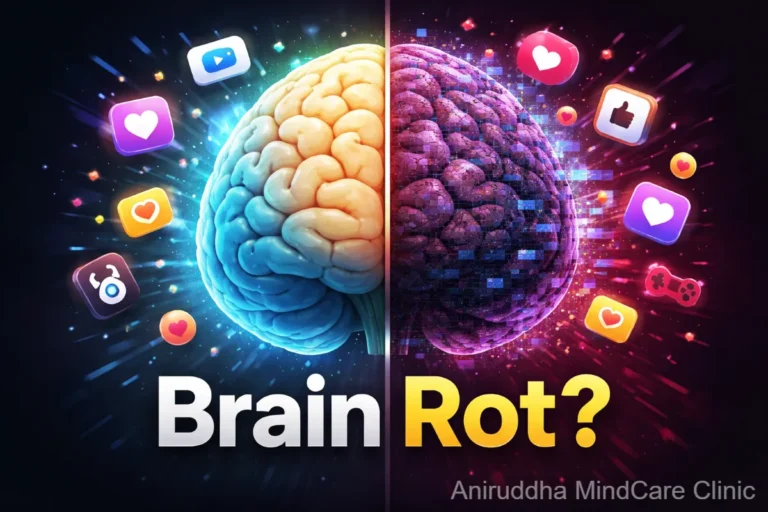
Read this amazing article on ” Brain-Rot”
Final Thoughts
ChatGPT itself is not harmful. The risk lies in how and why it is used. Awareness, moderation, and emotional insight are crucial to prevent mental dependence on AI tools.
Used wisely, ChatGPT can be helpful. Used excessively, it may quietly weaken emotional independence.
Written by:
Dr Nishikant Vibhute
Consultant Psychiatrist, Mumbai
“Better mind for better future!”